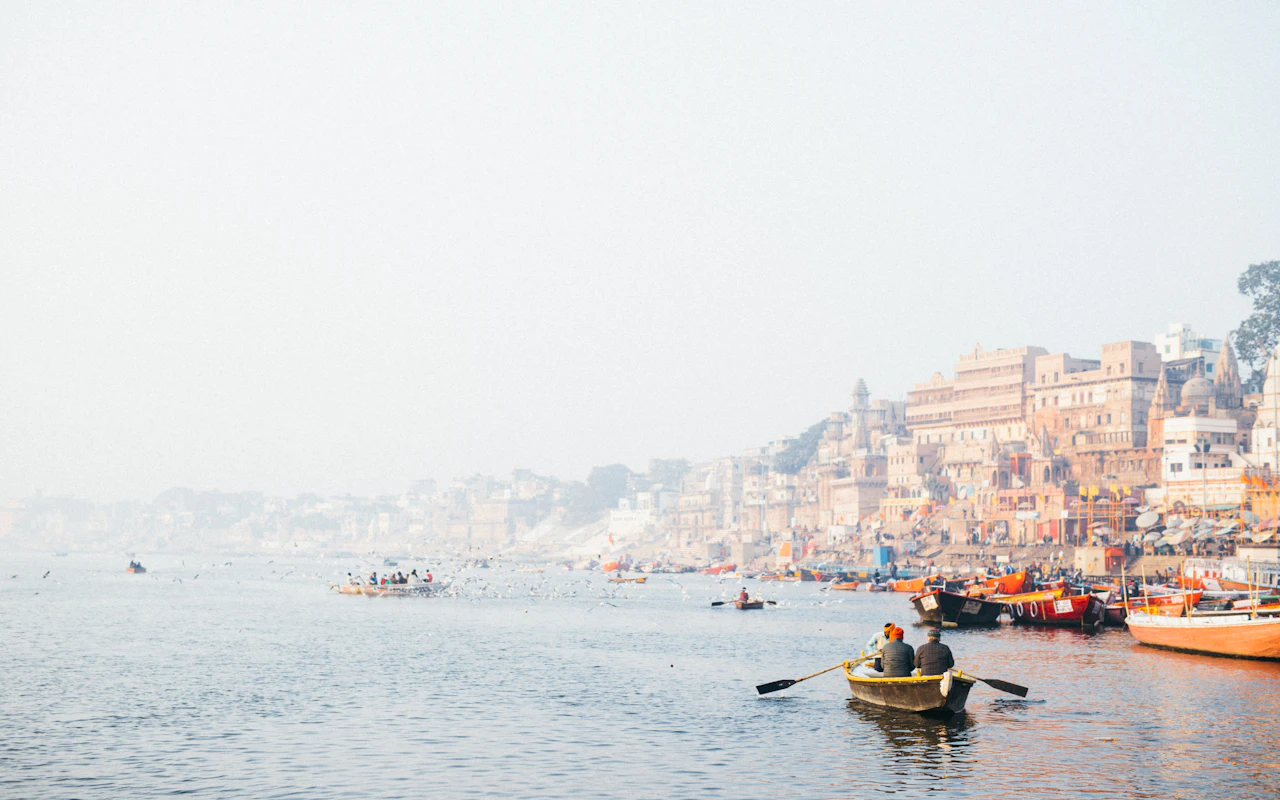
Every November, in the crisp week before Kartik Purnima, the Uttar Pradesh tourism department does something rather wonderful: it hands the riverfront a stage and lets Banaras be Banaras at full volume. Ganga Mahotsav is the city’s official cultural festival — typically five days of music, dance, crafts and river sports, timed so that its final crescendo lands exactly on Dev Deepawali, when the million diyas take over. (In 2026 that points to roughly 20–24 November; the exact programme follows the lunar calendar and is announced by UP Tourism each autumn.)
Why this festival matters
Banaras is not merely a pilgrimage town with music on the side; it is one of the great gharanas — the Benares gharana of tabla and vocal music gave India Pandit Ravi Shankar (born in these lanes), Ustad Bismillah Khan (whose shehnai opened from the Vishwanath temple’s balcony for decades), Girija Devi (empress of thumri), Pandit Kishan Maharaj and an unreasonable share of everyone else. Ganga Mahotsav is the city formally seating this heritage on its grandest furniture: open-air stages on the river, where maestros of sitar, sarod, shehnai, kathak and dhrupad perform into the November night with the Ganga as backdrop and the ghats as gallery. Entry to the main evening concerts is generally free or near-free — the festival’s best-kept secret for travellers who’d pay fortunes for the same artists in Delhi.
Days on the water, evenings on the stage
Daytimes belong to the river and the bazaars. Expect boat races — the boatmen’s community rowing for honour with terrifying commitment — along with kite-flying contests above the ghats, wrestling displays from the akhadas, and a large crafts mela where Banarasi silk weavers, wooden-toy makers, gulabi-meenakari enamel artists and metalworkers sell directly. (If you’re going to buy a Banarasi saree anywhere, buying it from the weaver at the Mahotsav stall is both the best story and frequently the best price.) Food stalls run the full khana syllabus — arrive hungry.
Traveller’s plan
The Mahotsav week is the single best-value window to visit Varanasi: the weather has turned perfect — cool mornings, golden afternoons — the city is dressed for festivities, and the programming fills every evening. But it shares this excellence with the Dev Deepawali crowds, so book accommodation two or three months out. Build your days as the city does: dawn boat ride from Assi, temple darshan or craft-shopping at noon, concerts after dark, and the Dashashwamedh aarti any evening you’re free by seven. Then stay for the festival’s last night, when the music yields the stage to a million lamps, and understand why Kashi schedules its culture as a fifteen-day ascent to a single full moon.