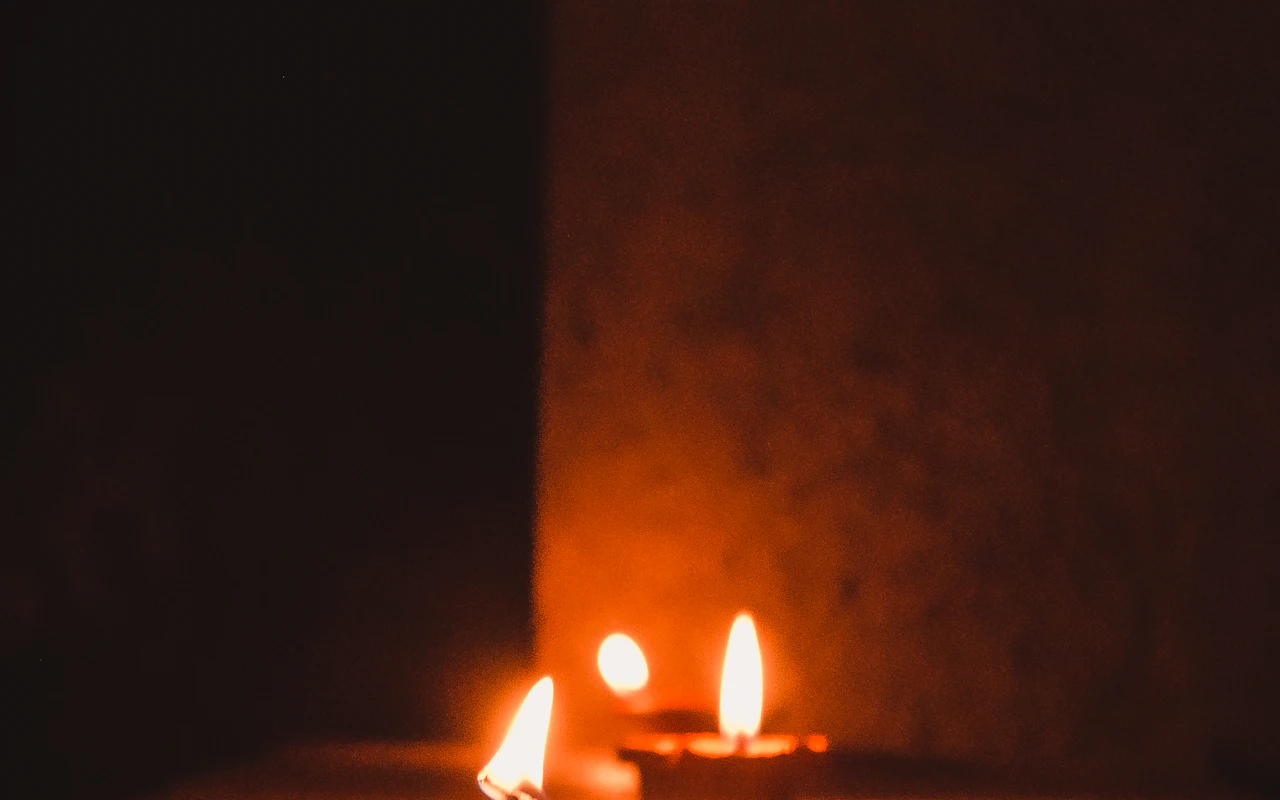
There is one night each year when Varanasi stops being a city and becomes a constellation. On Kartik Purnima — the full moon fifteen nights after Diwali — every one of the riverfront’s eighty-four ghats is dressed in oil lamps: along the steps, the ledges, the window-sills, the temple plinths, the very edge of the water. Estimates run beyond a million diyas. From a boat in midstream, the entire seven-kilometre crescent of the city burns gold under the full moon, doubled in the river. People who have seen it tend to go quiet when asked to describe it. This page will try anyway.
Diwali for the gods
The name means “the Diwali of the gods,” and the legend earns it. After Lord Shiva destroyed Tripurasura — the demon of the three flying cities, whose tyranny had bent all the worlds — the gods, giddy with relief, descended to the holiest place they knew to celebrate: the ghats of Kashi, where they bathed in the Ganga on Kartik Purnima. The lamps are lit for them — a city-sized welcome mat for divine houseguests. It folds neatly into the month-long observance of Kartik, when devout households already float akash-deep (sky lamps) for the ancestors, most movingly at Panchganga Ghat, where the modern festival was revived in its present form in 1985 at the Dashashwamedh–Panchganga stretch.
The evening also honours the river’s soldiers: at Dashashwamedh, the Ganga aarti on this night is performed on a grand scale, with lakhs in attendance and ceremonies honouring the martyrs of the armed forces — Kashi’s old genius for braiding the sacred and the civic.
How to do the night well
Plan early. Dev Deepawali (in 2026, 24 November — the date follows the lunar panchang, so always reconfirm) now draws crowds rivalling any event in India; hotels fill months ahead and prices triple.
- Book a boat in advance — this is the one night the splurge is mandatory. Negotiate and confirm a day before; shared big boats are cheaper, private rowboats more magical. Be on the water by 4:30 pm before the river traffic locks solid. (General fare wisdom in our yatra tips.)
- On foot, the wide steps of Assi breathe better than the central crush, and the view from across the river (Ramnagar side) has lately become the photographers’ secret.
- The lamps are lit at dusk, roughly 5 to 6 pm; the spectacle peaks 6:30–8 pm. Dress warm — November on the water is genuinely cold.
- Eat early or carry food; the lanes are impassable by evening. A winter visit also means malaiyo season — see our khana guide.
Treat the night as darshan, not just a show: lakhs of pilgrims are bathing, praying and remembering their dead amid the glory. Keep your flash off, your voice low, and one diya of your own on the water — the river will take it from there.