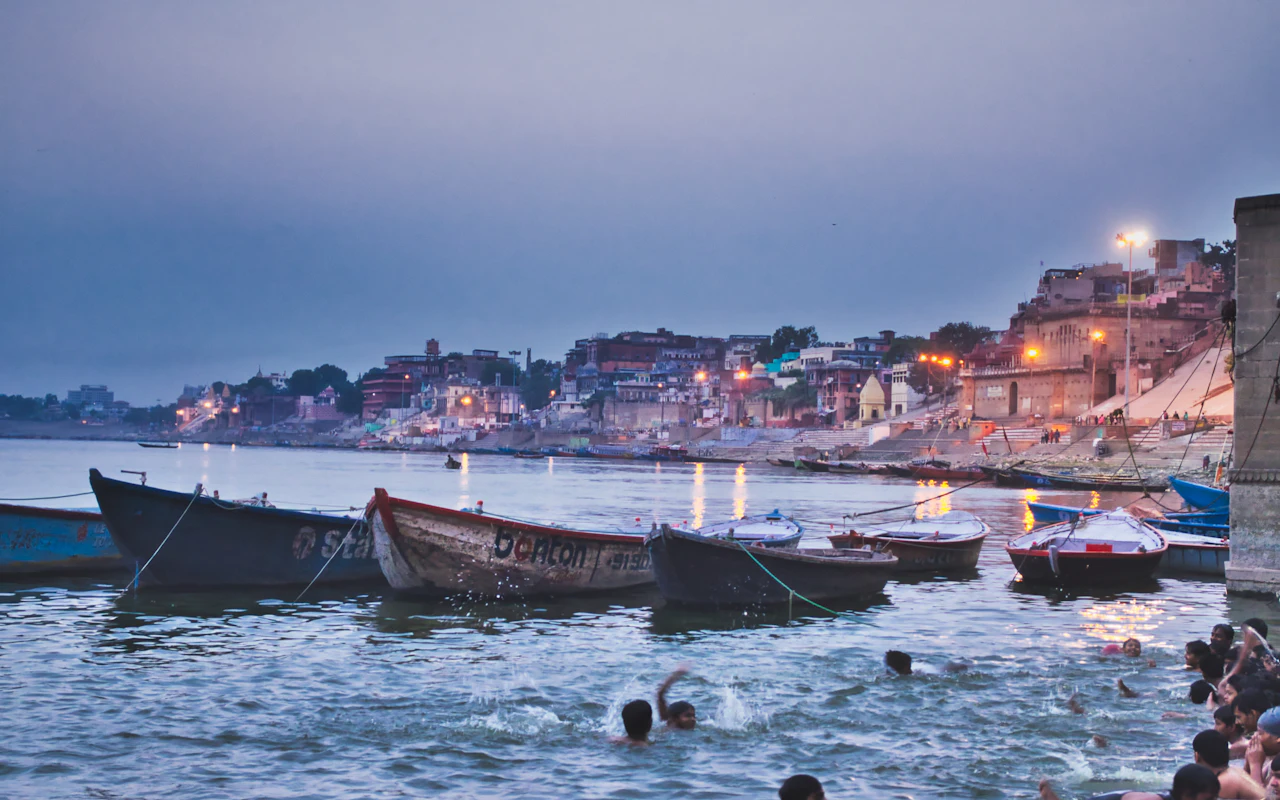
Stand at Panchganga at dawn and you are, the tradition insists, standing at the meeting of five rivers. You can see only one — the Ganga, wide and pewter-coloured in the early light. The other four arrive invisibly: the Yamuna, the Saraswati, the Kirana and the Dhutpapa, subterranean and mythical, braiding themselves into the great river exactly here. Kashi has always preferred its geography metaphysical, and Panchganga is the most beautiful proof.
Saints on the steps
No ghat in Varanasi carries more concentrated literary and devotional history. It was on these steps, in the early fifteenth century, that a Muslim-born weaver’s son named Kabir lay down in the dark where he knew the great teacher Ramananda would descend for his pre-dawn bath. The guru’s foot touched him; “Ram! Ram!” escaped the startled teacher’s lips; and Kabir rose claiming the name as his initiation mantra. From that audacious act on these stones came the most fearless poetry India has produced — verses that mocked priest and mullah alike and are still sung in a million homes.
Two centuries later the poet-saint Eknath of Maharashtra completed his Marathi Bhagavata here, and the ghat became — and remains — dear to Maharashtrian pilgrims. Above the steps rises the Bindu Madhav temple, dedicated to Vishnu, whose original grand structure was demolished in 1669 and replaced by the riverside mosque whose minarets long dominated this skyline; the living temple continues warmly in a smaller form beside it. The ghat’s layered silhouette tells Kashi’s whole complicated history in one glance — and the city, in its fashion, keeps bathing, praying and flying kites beneath it.
The month of sky-lamps
Visit in Kartik (October–November) if you possibly can. For the whole month, Panchganga’s devotees hoist akash-deep — sky-lamps in little baskets on tall bamboo poles — lit each evening for the ancestors, so the ghat grows a forest of swaying stars. The observance peaks on Kartik Purnima with Dev Deepawali, when Panchganga, as the festival’s traditional point of origin, becomes one of the most overwhelming sights on the entire riverfront: every step, ledge and windowsill carrying its own flame.
Panchganga rewards the walker. Come north from Dashashwamedh through the galis — past Manikarnika, past Scindia Ghat’s drowned temple — and you arrive with the city’s whole story already in your pockets. The steps here are tall and quiet, the pilgrims unhurried, and the river, with its four secret sisters, says nothing and means everything.