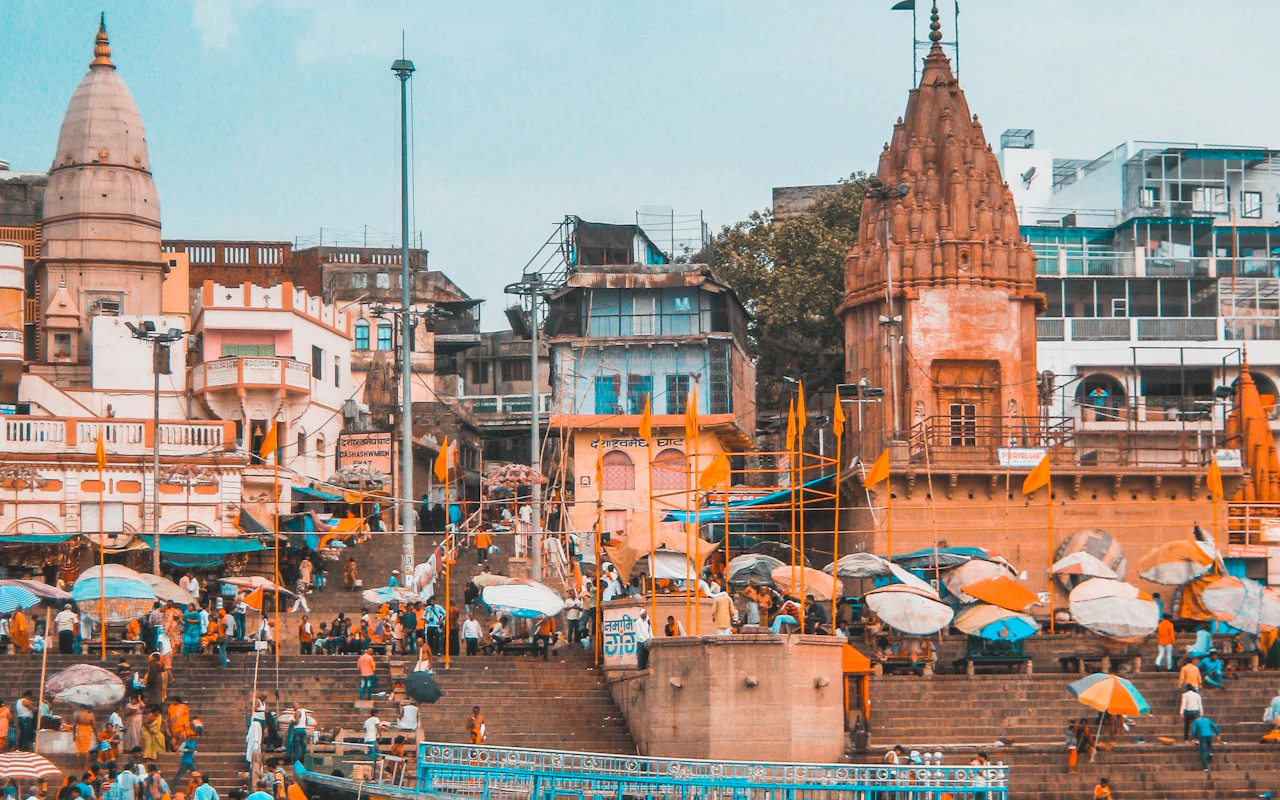
There is one ghat in Kashi where the tourist’s camera should stay down and the heart should stay open. Manikarnika is the mahashamshan — the great cremation ground — and it is unlike anywhere else on earth, because here cremation is not hidden away at the city’s edge. It sits at the very centre of the riverfront, fires burning day and night, while ten metres away children fly kites and boatmen argue about cricket. Kashi does not look away from death. That is the whole point of Kashi.
The earring of Parvati
The name means “jewelled earring.” In the loveliest version of the legend, Lord Vishnu dug a kund here with his discus and filled it with his sweat from aeons of tapasya; when Shiva came to see it, he trembled with delight and a mani (jewel) from his — or in most tellings, Parvati’s — earring fell into the pool. The Manikarnika Kund still sits behind the burning grounds. Another story says Shiva whispers the taraka mantra — the prayer of crossing — into the ear of everyone who dies in Kashi, which is why the dying have travelled here for millennia, and why the old city is dotted with mukti bhawans, hospices for those who came to die well.
To be cremated at Manikarnika is, in the Hindu imagination, to step off the wheel of rebirth entirely. The fire here is said to have burned without interruption for thousands of years, tended by the Dom community, whose elder — the Dom Raja — holds a hereditary dignity older than most dynasties.
How to visit without trespassing
Be the kind of guest Kashi deserves. Photography of the pyres is deeply offensive — keep the camera away, refuse anyone who offers a “good view” for money (a common hustle), and do not accept invitations from touts to “see the ceremony up close” which end in aggressive donation demands. Watch quietly from the upper steps, or — most naturally — from a boat passing on the river, which is how most travellers first encounter the ghat, somewhere between Dashashwamedh and Panchganga. Dress soberly. Speak softly. Grief and liberation share these steps with absolute equanimity, and both deserve your silence.
What stays with you is not morbidity — it is the matter-of-factness. The marigold sellers, the stacked mango-wood, the bells of the Kaal Bhairav processions, the chanting of Ram naam satya hai arriving through the lanes like weather. An hour near Manikarnika quietly rearranges your relationship with mortality, which is precisely the gift this city has offered pilgrims for three thousand years.