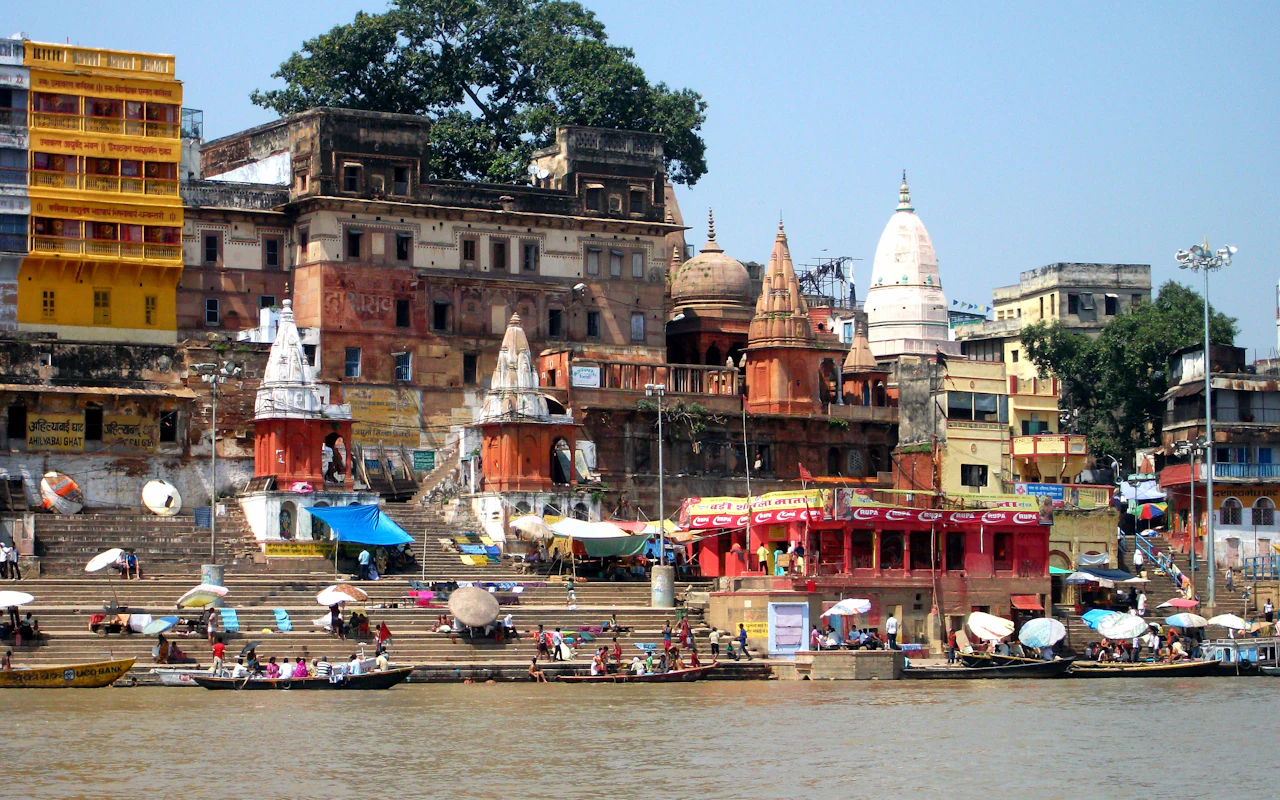
If Kashi has a heartbeat, you can hear it loudest at Dashashwamedh Ghat. This is the ghat your boatman points to with pride, the one every first-time yatri is led to, the stage on which the city performs its most beloved ritual — the evening Ganga aarti.
The legend of the ten horses
The name itself is a story. Das means ten, ashwamedh is the ancient horse sacrifice, and legend says Lord Brahma himself performed a yagya of ten horses here to welcome Lord Shiva back to Kashi. Whatever the kalpas have done to the details, the belief remains beautifully intact: bathing here is said to carry the punya of that primordial sacrifice. Pilgrims have been wading into the river at this exact spot for well over a thousand years — the ghat finds mention in texts and travelogues long before the present stone steps were laid by the Marathas in the 18th century, with Ahilyabai Holkar of Indore leaving her gentle fingerprints here as she did across the city.
The evening the river catches fire
Come at dusk. The steps fill up an hour early — families spreading shawls, sadhus settling into their familiar corners, boats stacking three-deep on the water, their passengers facing the shore like an amphitheatre audience. Then the young pandits in silk kurtas take their platforms, conches sound, and for forty-five minutes the air is all camphor, marigold and bell-metal. Multi-tiered brass lamps trace slow circles of fire against the dark river. It is choreographed, yes, and crowded, certainly — and somehow none of that dilutes it. When a few hundred people sing Om Jai Gange Mata together, the hair on your arms will not consult your opinions first.
A quiet tip from a local friend: the aarti viewed from a boat is a different experience from the aarti viewed from the steps — the flames double themselves in the water, and the breeze carries the heat of the lamps across to you. Book a rowboat an hour before sunset and ask the boatman to hold position mid-river. (More boat wisdom in our yatra tips.)
Mornings are the secret
Everyone knows Dashashwamedh by night; few stay for it by morning. At 5:30 am the same steps are nearly empty — wrestlers walking back from their akhada, priests setting up their palm-leaf umbrellas, the first boats sliding out into the mist. This is when you understand why the rishis chose this river. Take the dawn boat ride from here toward Manikarnika and back past Man Mandir Ghat, and you will have seen the city’s two faces in one day.
The lanes behind the ghat lead directly to Kashi Vishwanath Mandir and the Annapurna temple — most pilgrims do the darshan-then-aarti circuit in a single evening. And during Dev Deepawali, this entire stretch becomes the centre of a million-diya constellation that you should see once before you die. Preferably more than once.