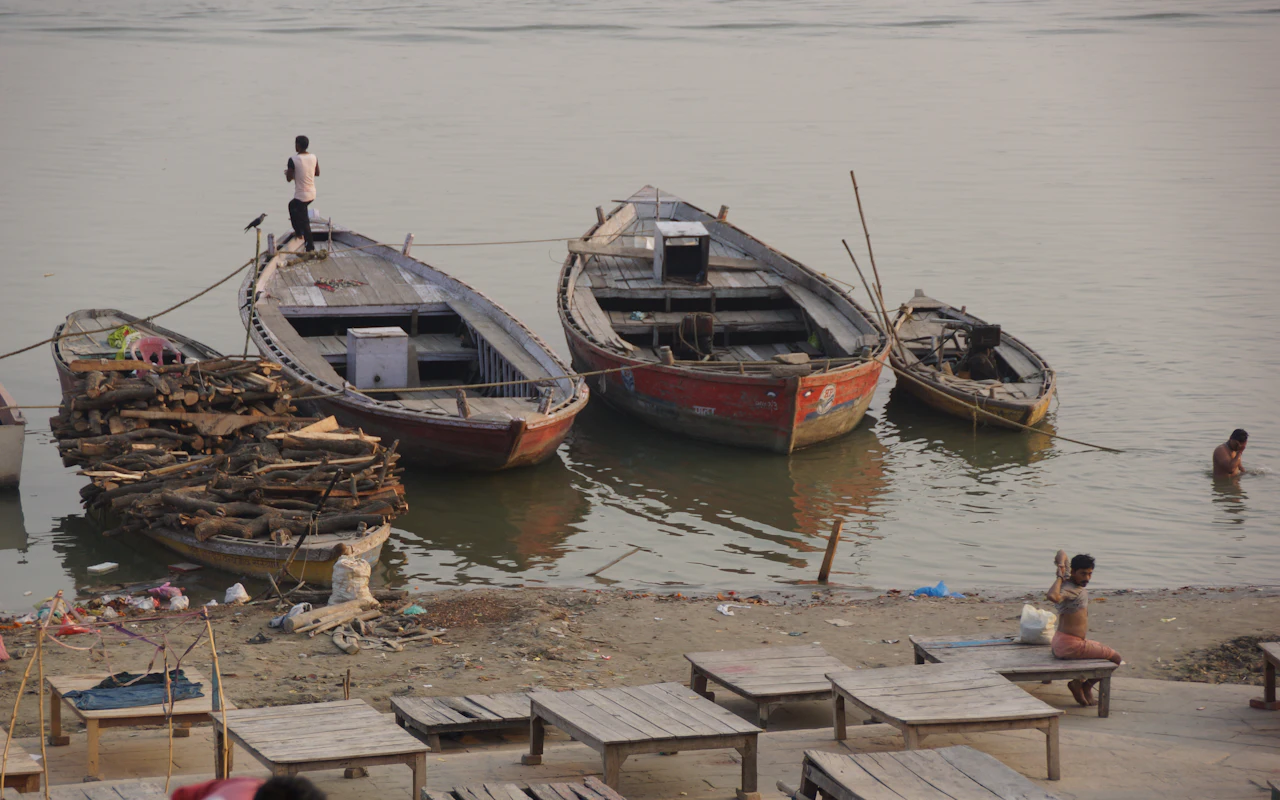
Halfway between the spectacle of Dashashwamedh and the solemnity of Manikarnika, the riverfront makes room for a guest from the Himalayas. Lalita Ghat is Kashi’s Nepali quarter — built by the kings of Kathmandu, crowned by a temple that looks airlifted from the Bagmati, and now, in its newest role, the river-doorway to the grandest temple project in modern India.
A Pashupatinath on the Ganga
In the early nineteenth century, Nepal’s King Rana Bahadur Shah lived in Banaras during his years of exile. Homesick in the way only an exile in a holy city can be, he resolved to build a copy of his homeland’s holiest shrine — Pashupatinath — right here above the Ganga. He was assassinated before it was done; his son Girvan Yuddha completed the work around the 1830s, and the Nepali Mandir (locals say Kathwala — “the wooden one”) has stood since: a true pagoda in terracotta and carved wood, its workmanship Nepali down to the last strut, including the frank Khajuraho-style carvings that surprise visitors who look closely at the eaves. Workers and timber came from Nepal; so, remarkably, still does much of its care — the temple remains tied to Kathmandu’s Pashupatinath establishment, a piece of one sacred geography embedded in another. Under its Shiva linga and peepal shade, you can stand in two countries’ devotions at once.
The goddess who plays
The ghat is named for Lalita Devi, “she who plays” — a gentle, supremely beautiful form of the great Goddess, one of the mahavidyas’ tender faces, whose small shrine here counts among Kashi’s significant shakti sites. The Kashi Khand promises that her darshan after a Ganga bath at this ghat grants the fruit of circumambulating the entire earth — the kind of cosmic shortcut this city specialises in.
Doorway to Vishwanath
Lalita Ghat’s profile changed overnight in 2021 when the Kashi Vishwanath Dham corridor opened: the great pilgrim avenue now runs from this stretch of river directly up to the golden-spired Vishwanath temple, restoring the ancient sequence — bathe in Ganga, carry her water up, pour it on the Jyotirlinga — as a single walkable processional. On busy days a river of pilgrims flows up from the water here, gangajal in hand. Come early morning instead: the wood of the Nepali temple glows, the steps are nearly private, and you can take in the carvings, the goddess, and the corridor’s pale stone gates before the day’s tide. Then continue north — Manikarnika and its eternal lesson is only a few hundred metres on.